Dear enthusiasts of the biological control of the whole of Latin America and the Caribbean,
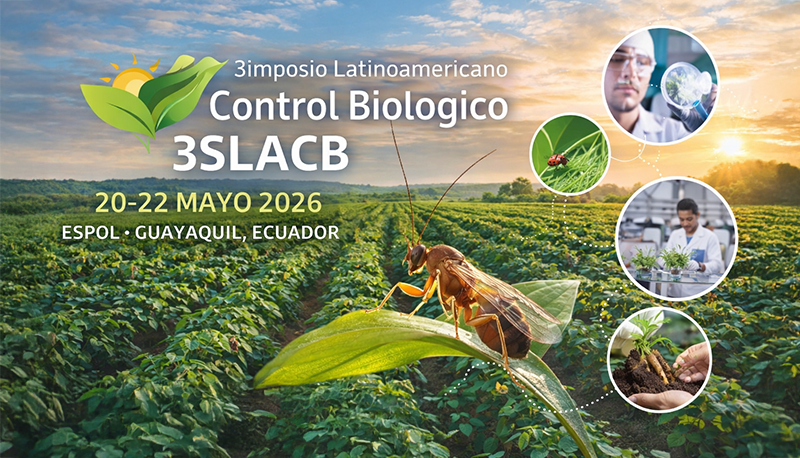
we want to invite you to participate in the 3rd Latin american Symposium on Biological Control (3SLACB) that will take place between days 20 and 22 may 2026, face-to-face in the building STEM of the Escuela Superior Politécnica del Litoral (ESPOL), in the city of Guayaquil, Ecuador.
The Latin american symposium on Biological Control conducted every three years and is organized by the IOBC-NTRS in conjunction with a local institution related to biological control. In this opportunity, the event is organized by IOBC-NTRS together with Researchers/Faculty of ESPOL, of the National Institute of Agricultural Research (INIAP) and Agrocalidad of Ecuador. It will be organised in lectures, oral and poster presentations.
Biological control is one of the pillars of sustainable agriculture, contributing to the reduction of the use of chemical pesticides, the conservation of biodiversity and the resilience of the production systems. In the current context, marked by the effects of climate change, the globalization of agricultural trade and the growing demand for healthy foods, the development and implementation of strategies of biological control is the key to ensure food security and environmental. In this context, the objective of the Latin american Symposium on Biological Control is strengthen the technical capacities of scientists, university students, professionals, technicians, companies, government entities, and farmers, in the management of biological pests, diseases, weeds, and vectors, in order to produce healthy food and safe. In addition, it seeks to promote scientific and technical cooperation, fostering innovation, knowledge transfer and coordination between the different actors of the region.
The 3SLACB it will be organised in lectures, and the following thematic areas:
- Biological Control of insect pests, diseases, weeds, and vectors
- Breeding and production of biological controllers
- Innovative methodologies in biological control
- Experiences of extension and transfer in biological control
- Biological Control and climate change
MORE INFORMATION AT:
https://simposiolatamcontrolbiologico.com